
Local History
from the Classroom of Natasha ALSTON:
USING THE NEGRO MOTORIST GREEN BOOK to CreatE your Own Local History Tour
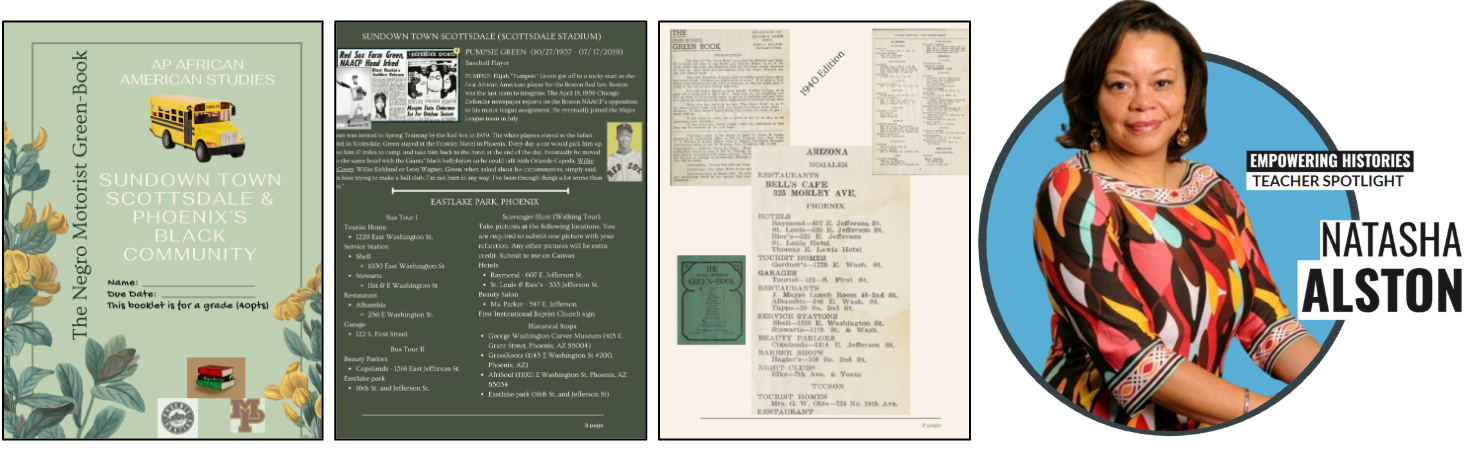
SKill 2C: Explain the significance of a source’s perspective, purpose, context, and audience.
“Local history matters because often students think history happens somewhere else…Taking them on a field trip to historical sites in their own community allows students to understand that history is all around them…It collapses the distance between "history" and "home," and once that distance collapses, students start asking what else happened here that they were never taught.” - Natasha Alston
“(The local history tour) was an eye opening experience. When learning about segregation in class, or even in past history classes, you think that it was so long ago and so far away in the south. But, by visiting the museum it was crazy to think that segregation even took place here in Phoenix, not so long ago.” - Student testimonial from a member of Ms. Alston’s class
Objective: Locate historical Black landmarks and Green Book sites in your own town to start to build a memorable local field trip for your students…so that your students will be able to explain how local community and resistance shaped daily life in your city.
Natasha Alston on the power Of Local History
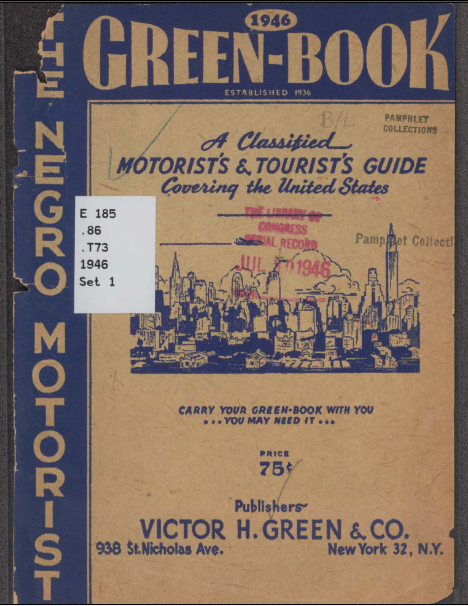
Natasha used the 1940 version of the Green Book to make her class tour. The Library of Congress has a full PDF copy of the 1946 copy to get you brainstorming about your local area.
“Local history matters because often students think history happens somewhere else — in a textbook, in another state, in a documentary about someone else's hometown. Taking them on a field trip to historical sites in their own community allows students to understand that history is all around them. They become interested in looking at their own neighborhoods differently — the motel on the corner, the park down the street, the church sign they've driven past a hundred times. When they learn that Eastlake Park was the center of Phoenix's Black community, or that a Major League ballplayer was driven 17 miles back and forth from a "Negro" motel in Phoenix to Spring Training in Scottsdale because he couldn't stay where his white teammates stayed — that's not abstract history anymore. That happened blocks from where they eat lunch. It collapses the distance between "history" and "home," and once that distance collapses, students start asking what else happened here that they were never taught.” - Natasha Alston, Phoenix, AZ
EMPOWERING HISTORIES SPOTLIGHT
I met Natasha through her leadership role in the AP African American Studies Exam reading. I am so excited to share her local tour idea lesson with you and hope it inspires more teachers to create tours that bring their own local histories to life! I just love the idea of starting to brainstorm with the Green Book! I have always sought to bring local history into my classroom and to leverage my students’ family histories. I’ve created numerous “virtual tours” of my local area in Grand Rapids, Michigan (link), but because the sites are spread out and don’t have tours or activities attached to them, the local history I incorporate has largely meant bringing those stories into the classroom. When Natasha told me about the tour she does with her students, I was immediately excited. Her plan is brilliant, and, even better, it is something that could be replicated in so many communities. It brings together a collection of mini-stories and turns them into an immersive, memorable experience for students.
Natasha’s Local History Tour NOTES
“This grew directly out of building the AP African American Studies program at Mountain Pointe — one of only three in Arizona. Once I started digging into primary sources like the 1940 Negro Motorist Green Book, I realized Phoenix and Scottsdale had entries in it, which meant this wasn't a story happening "down South" — it was happening in our own backyard. Pumpsie Green's story — being the first Black player for the Red Sox and having to stay at the Frontier Motel in Phoenix while his white teammates stayed at the Safari in Scottsdale — became the anchor for the whole trip. From there it was a matter of mapping the Green Book listings onto Eastlake Park and turning it into a real itinerary: bus tours past the old hotels, service stations, and beauty parlors, a scavenger hunt with photo documentation, and stops at places like the George Washington Carver Museum, GrassRootz, and AfriSoul that carry that history forward today.”
What advice would you give to teachers trying something similar in their own communities?
Start with primary sources, not secondary summaries. The Green Book itself is public domain and searchable — nearly every city has entries, and that's your map.
Look for a hook — a person or story students can follow, the way Pumpsie Green's story anchors this trip. Facts stick better when they're attached to a human being.
Partner with local institutions (museums, cultural centers, historical societies) — they often have research and relationships you can't replicate on your own.
Build in reflection, not just observation. A scavenger hunt or set of site visits is only half the assignment; asking students to write about what surprised them and what they'll share with someone else is what makes the learning stick.
Expect resistance or discomfort from some corners, and don't let that stop you. Local history includes uncomfortable history, and that's exactly why it matters.
About NATASHA Alston
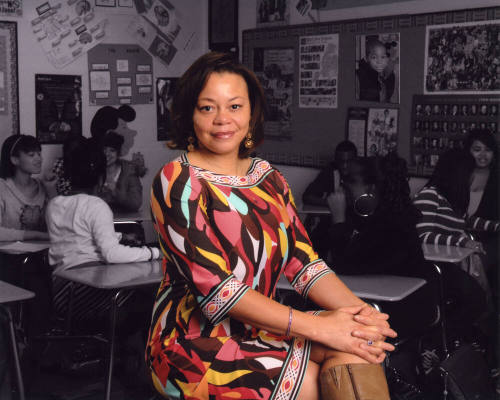
Empowering Educator Natasha Alston
Natasha Alston's love of teaching grew out of a simple desire to work with young people, and she found the perfect fit in AP African American Studies and AP Psychology — combining her passion for young adults with her lifelong quest to learn all she could about the African American experience in this country. Raised in New York and shaped early on by a strong sense of culture and family, she's called Ahwatukee, Arizona home for nearly three decades, working at Mountain Pointe High School for over 25 years and with the Tempe Union High School District for 27. Her academic path — a BA in Sociology from St. Lawrence University and an MPS in Africana Studies from Cornell — sparked a lifelong love of travel, history, and learning, taking her to the continent of Africa three times, including a trip to Angola where she walked the path of her ancestors. She's sponsored several clubs at Mountain Pointe, including BSU, spent ten years as a Reader for AP Psychology, and now serves as a Question Leader for AP African American Studies. She often comes back to a line she found on a poster: "The best teachers are those who show you where to look, but don't tell you what to see," by Alexandra K. Trenfer — a philosophy that captures exactly how she sees her role: not handing students the answer, but giving them the tools to find it themselves.