"What's happening in our country?"
"What does this mean for my family?"
"What do you do when you apply for a Green Card but it never gets processed?"
"Am I safe here?"
As immigration raids and anti ICE protests dominated headlines this year, my students started asking questions that weren't on the AP exam.
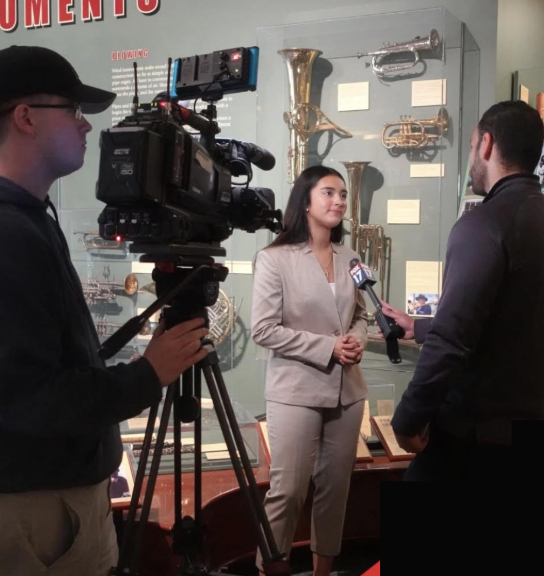
“East Kentwood Senior told of her father’s deportation when she was 3, but “DACA literally saved us. It gave my mom opportunities that once felt impossible. She was able to work legally, continue to build her future and eventually earn her degree”
The fragmented images and information the algorithms provided were leaving them confused and anxious. They needed more. They needed historical context, and they needed a safe space to ask questions, share their experiences, and process current events.
History classrooms should help students understand the world they live in, not hide from it.
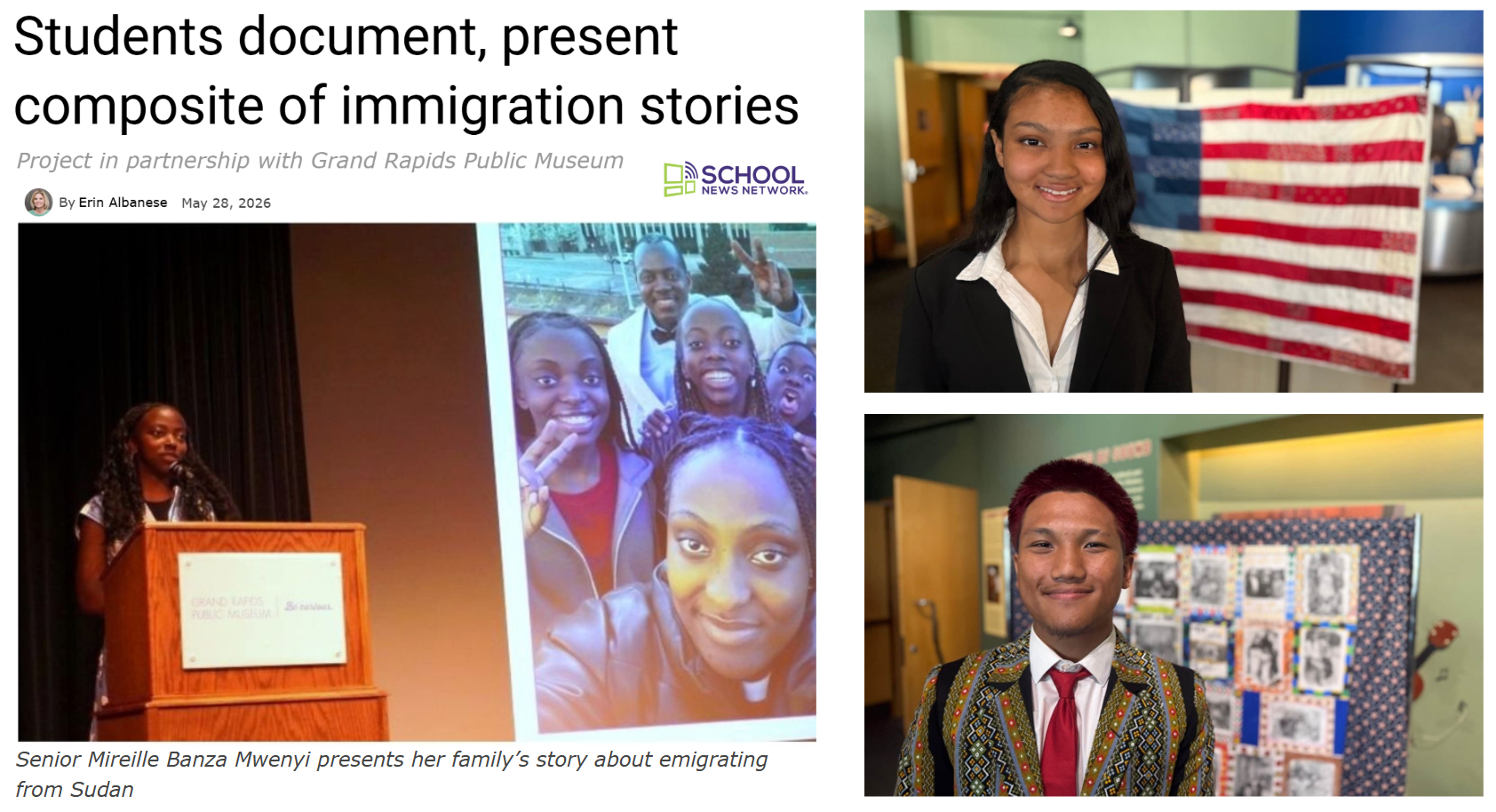
Therefore, students from my AP U.S. History and AP African American Studies classes responded to the current moment the way historians do: by asking questions, gathering evidence, conducting interviews, and telling stories. Students researched their family migration histories.
We invited community stakeholders and members of the press to hear their stories at an event called "Our Composite Community," inspired by an 1869 Frederick Douglass speech in defense of Chinese immigration. Like Douglass envisioned, my students told our community about the strength of a nation brave enough to stand on the freedoms that we claim: equality under the law for all, erasure of individuality for no one, and a nation that is stronger for embracing our composite nationality.
“We are living proof that diversity is our strength.”
- Hawathiya MAlual, East Kentwood Senior
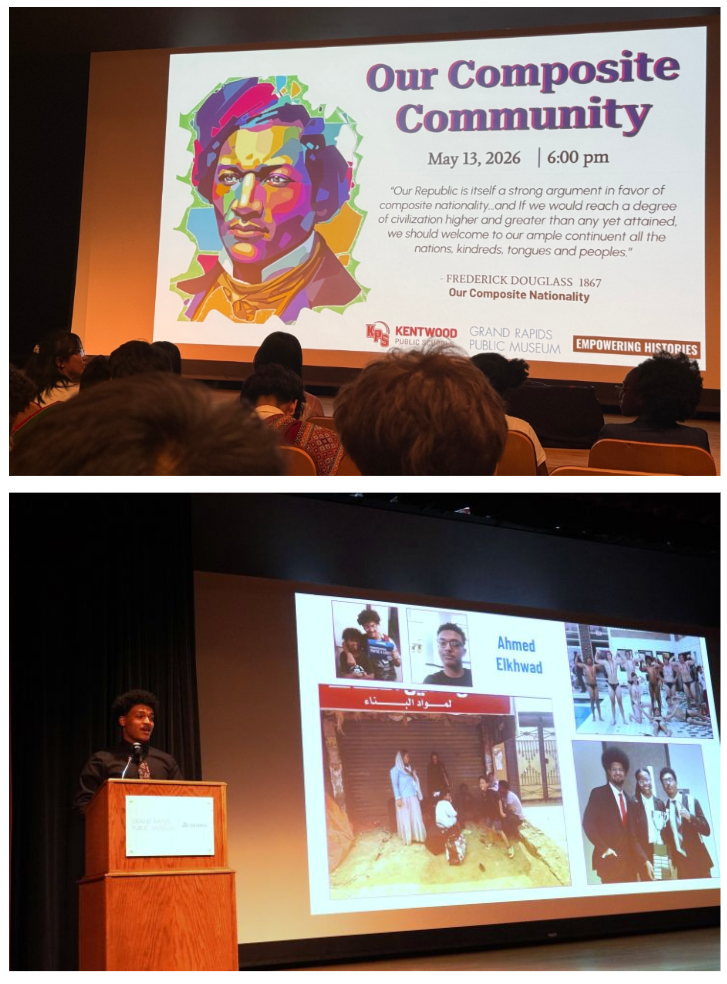
‘Refuge is not just a place you reach; it is something you build out of community and out of the courage to begin again. I did not arrive here with much. But I made the most of it.’ - 2026 class valedictorian, Sudanese refugee and soon a student of Stanford University, Ahmed Elkhw
In front of their peers, families, school board members, and state and national legislators, my students explained the impact of policies like the Refugee Act, the Hart-Cellar Act, the 14th Amendment, and DACA as they argued that these policies not only align with our national values, they are also strengthening our community because student story after student story ended with future plans and scholarships already accepted to study medicine, law, and, of course, history (!!!).
The framework for the project was developed last year through a similar project with students of Vietnamese ancestry as I partnered with my colleague and award winning AP Art teacher, Le Tran, and the Grand Rapids Public Museum to leverage our students' voices in commemoration of the 50th anniversary of the Fall of Saigon and the origins of the Refugee Act.
This year, as student interest and questions about current events increased, I adapted the format from the previous spring to help interested students conduct research and share their stories publicly.
This was the first year I incorporated Douglass's "Our Composite Nation" speech into my courses. I introduced it in APUSH Topics 6.8 and 6.9 on Gilded Age migration, and in AP African American Studies, I inserted the speech after our coverage of Reconstruction and connected it to the course's long standing themes about American identity. Douglass's vision was remarkably forward looking. Long before multiculturalism became part of the American vocabulary, Douglass imagined a nation whose strength came from its diversity. It offered a great onramp to classroom discussion and reflection.
Over 40 students participated in the event, and their stories will soon be available in the City of Grand Rapids' historical archives through the Grand Rapids Public Museum. A few of the students' stories have already been published through local media sites.
I highly recommend checking out these powerful testaments to democracy, multiculturalism, and what happens when students engage with history and are given a platform to use their voice!
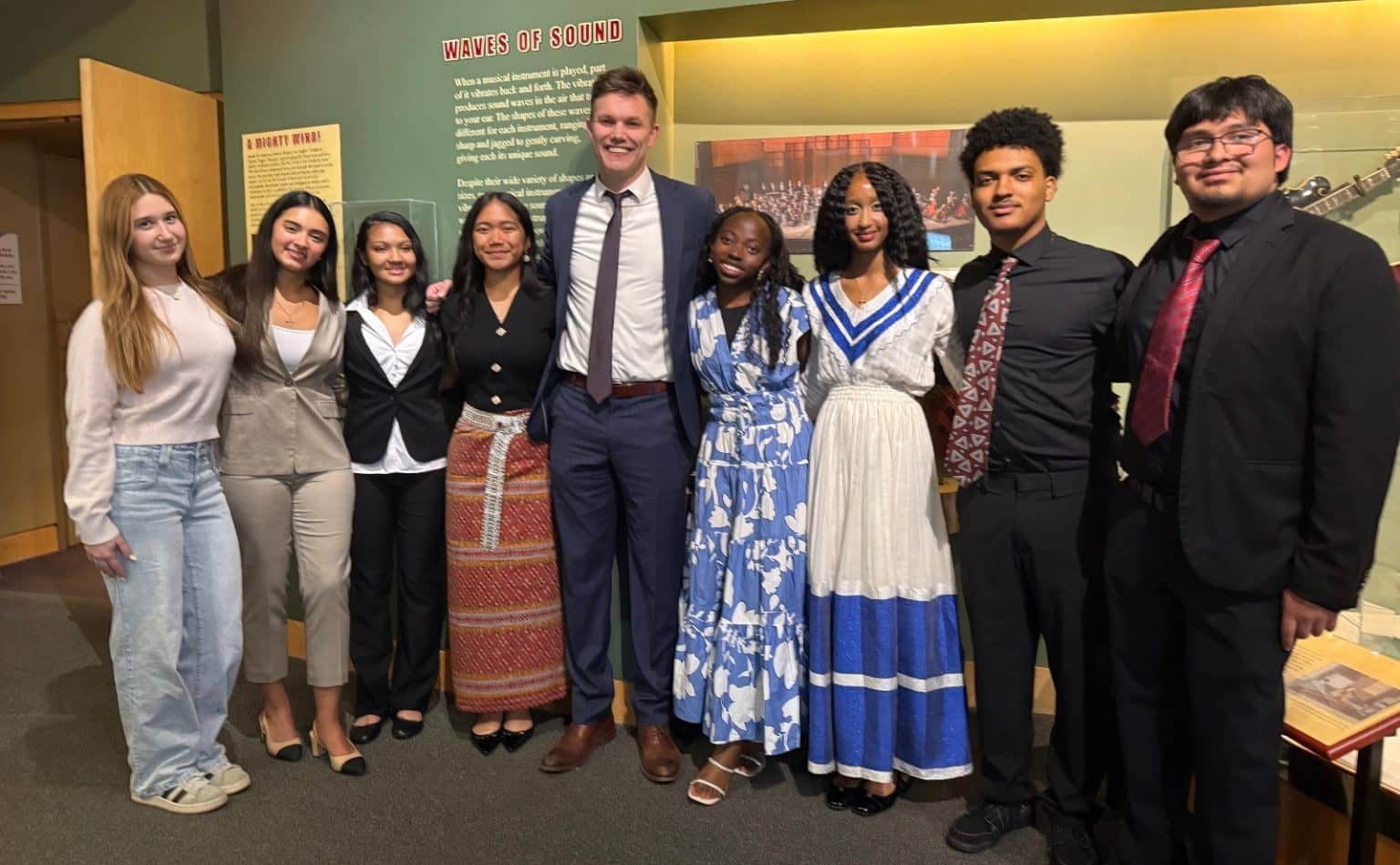
Link to Edwin’s Story: East Kentwood Senior and “We the People” State Champion, shares that his immigrant parents’ sacrifices in West Michigan shaped his education, identity, and commitment to civic life.”
Link to Hawathiya’s Story: Hawathiya Malual shares how her Sudanese and Ethiopian refugee parents rebuilt their lives in West Michigan, inspiring her dreams of leadership, education, and service.
Link to Ahmed’s Story: Three years ago, he was forced to flee war-torn Sudan. He didn’t know any English and felt very alone his first months at East Kentwood. The swim team, Muslim Student Association, and the “We the People” team gave him the sense of belonging he craved in his new home. He just graduated top of his class and is headed to Stanford University to study aerospace engineering.